LED Light Therapy · Skincare Guide
LED Light Therapy Face Mask: What It Is, How It Works, and Why Your Skin Needs It
Tired of serums that promise everything and change little? Here's an honest, science-informed look at how an LED face mask works, what each wavelength does, and how to choose one that actually fits your skin goals.
By the LumiThera Product Education Team · Reviewed by our optical engineering team · Updated 10 月 2026
Sound Familiar? Why Your Skincare Routine May Feel Stuck
You've layered the serums, tried the viral cleanser, and read every ingredient label. Yet your skin still looks dull, breakouts keep returning, or fine lines seem a little more noticeable each season.
If that sounds like you, you're not alone. These are the frustrations we hear most often:
- Products that underdeliver: creams can only do so much at the skin's surface.
- Sensitive skin: strong actives like retinoids or acids can leave skin red and irritated.
- Adult breakouts: stubborn spots along the jawline that don't follow teenage rules.
- Costly clinic visits: professional facials and aesthetic treatments add up quickly in time and money.
A light therapy mask won't solve every concern. It does offer a gentle, hands-free way to support your existing routine at home, on your schedule.
What Is an LED Face Mask, and How Does It Work?
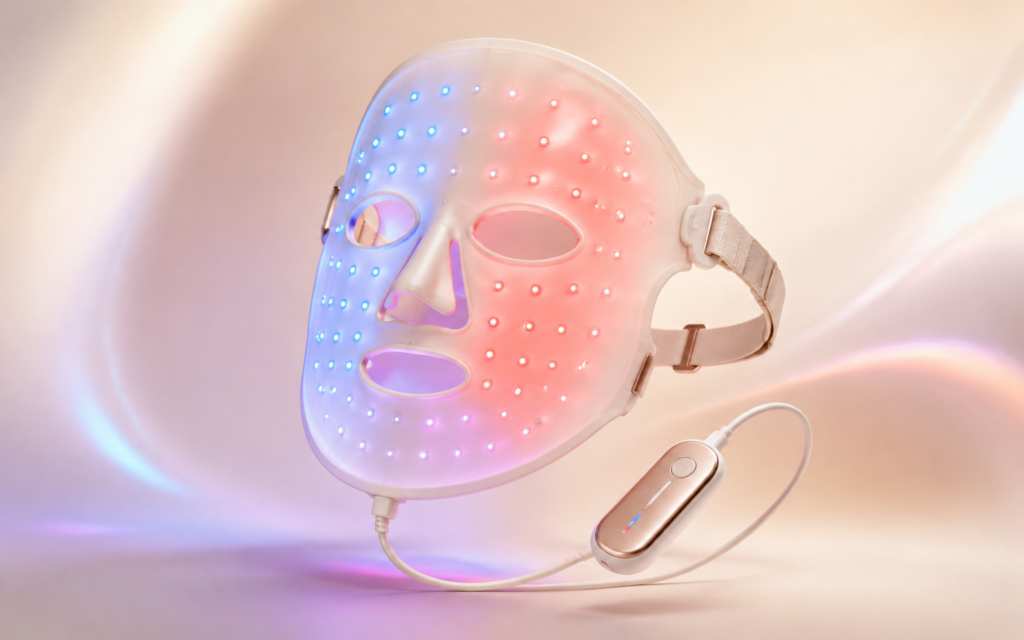
An LED face mask is a wearable device lined with light-emitting diodes. These diodes deliver specific wavelengths of light to your skin. Unlike many lasers, LEDs at typical home settings are non-ablative. They don't wound the skin's surface, so there's no downtime.
The science behind it is called photobiomodulation. Certain wavelengths are absorbed by components inside skin cells, and researchers believe this may influence cellular energy and repair processes. Each wavelength reaches a different depth, so each color has a different job.
| Light | Typical wavelength | Commonly used for |
|---|---|---|
| Red | About 620-660 nm | The most studied wavelength for anti-aging. It may support the look of smoother, firmer skin. |
| Blue | About 405-470 nm | Works near the surface and targets bacteria associated with breakouts. Popular in acne treatment routines. |
| Yellow | About 585-595 nm | Often chosen for sensitive skin to help calm the look of redness. Evidence is still emerging. |
| Near-infrared | About 810-850 nm | Invisible to the eye and reaches deeper. Often paired with red light for overall skin wellness. |
Red Light Therapy and Anti-Aging
Red light therapy is the reason most people buy an LED mask. Studies suggest it may support collagen-related processes, which can help improve the appearance of fine lines and uneven texture over time. Learn more in our guide on how LED light therapy supports a more radiant-looking complexion.
Blue Light and Breakout-Prone Skin
Blue light works closer to the surface. It has been studied for mild to moderate acne, and many people use it alongside gentle cleansing. Persistent or cystic acne still deserves a dermatologist's assessment.
What Does the Science Say?
LED therapy isn't a TikTok invention. Researchers have studied light-based skin treatments for decades, and dermatologists have used professional LED systems in clinics for years.
- Peer-reviewed research: Widely cited reviews, including one published in Seminars in Cutaneous Medicine and Surgery, describe how red and near-infrared light may support skin repair and rejuvenation processes.
- FDA clearance: In the U.S., some LED devices have received FDA clearance for specific uses, such as mild to moderate acne or wrinkles. Clearance applies to a specific device and use. It does not apply to all LED masks.
- CE marking: In Europe, CE marking shows that a product conforms to applicable safety requirements. It isn't a guarantee of cosmetic results.
The honest takeaway: the evidence is promising but still developing. Many studies are small, and results depend on wavelength, light output, treatment time, and consistency.
Who Is a Light Therapy Mask Best For?
An LED face mask may be a good fit for you if you:
- Notice early signs of aging, such as fine lines, dullness, or a loss of bounce.
- Deal with occasional breakouts and want a gentle add-on to your routine.
- Have sensitive skin that doesn't tolerate harsh actives well.
- Want a relaxing, hands-free ritual that fits busy evenings.
- Prefer non-invasive options with no downtime.
Check With a Doctor First If You:
- Take photosensitizing medications, such as certain antibiotics or isotretinoin.
- Have a light-sensitive condition, epilepsy, or an eye condition.
- Are pregnant or currently undergoing professional skin treatments.
How to Choose a Good LED Face Mask
Not all masks are created equal. Use this checklist before you add one to your cart. Want a deeper dive? Browse our LED device purchase guides.
1. Clearly Listed Wavelengths
Look for exact numbers, such as 633 nm or 850 nm, rather than vague color names. Choose the wavelengths that match your main goals.
2. LED Count and Even Coverage
More LEDs isn't automatically better. Even distribution across the forehead, cheeks, and jawline matters more than a headline number.
3. Certifications and Testing
Ask for documents that apply to your market, such as FDA clearance details, CE, or RoHS. A reputable brand will share them without hesitation.
4. Comfort and Fit
Flexible medical-grade silicone tends to sit closer to the skin than rigid shells. Check the weight, straps, eye openings, and how easy it is to clean.
5. Realistic Session Time and Frequency
Most home masks recommend short sessions, often 10-20 minutes, several times a week. Pick a schedule you can actually stick to, and be wary of brands that encourage longer sessions for "faster" results.
Usage Tips and Common Myths
Getting the Most From Your Mask
- 1. Start with clean, dry skin. Remove makeup and sunscreen so light isn't blocked.
- 2. Follow your device's instructions. Session length and frequency differ between models.
- 3. Protect your eyes. Use the goggles provided, especially with blue light, and never stare into the LEDs.
- 4. Be consistent. Track your skin with photos in the same lighting every few weeks.
- 5. Finish with skincare and SPF. Apply a gentle moisturizer afterward, and wear sunscreen every morning.
Myths vs. Facts
Myth: Longer sessions mean faster results.
Fact: More isn't better. Overuse won't speed things up and may irritate sensitive skin.
Myth: LED masks work like lasers.
Fact: LEDs are gentler and non-ablative. Expect subtle, gradual changes, not dramatic overnight results.
Myth: If you can't see it, it's not working.
Fact: Near-infrared light is invisible to the human eye. Check the mode indicators instead.
Myth: An LED mask replaces your skincare.
Fact: It works best alongside cleansing, hydration, and daily sun protection.
A Quick Word on Safety
Non-invasive doesn't mean right for everyone. Stop using the mask if you notice persistent stinging, headaches, eye discomfort, or unusual skin reactions, and speak with a qualified healthcare professional.
How We Approach LED Design
At LumiThera, every LED facial therapy mask is built around clearly specified wavelengths and tested for consistent light output batch after batch. Our flexible silicone design is made for comfort during real-life evening routines. Supporting compliance documents for your market are available on request.
Frequently Asked Questions
How long before I notice a difference?
There's no universal timeline. Many users assess changes after several weeks of consistent use, but individual results vary.
Can I use red and blue light together?
Some masks offer combination modes. Use them only as your device's instructions describe.
Can I treat my neck or body too?
Yes, with the right tool. A handheld therapy wand suits targeted areas, while a full-body LED panel covers larger zones.
Ready to Bring Light Into Your Routine?
An LED face mask isn't magic. It is one of the most convenient, non-invasive ways to support healthier-looking skin at home. Choose clear wavelengths, a comfortable fit, and a brand that's transparent about its specifications.
If you're curious, explore our mask's wavelengths and specifications. Or reach out to ask about current offers for first-time customers.
This article is for general educational purposes and is not medical advice. Individual results vary.
References and Further Reading
External Authoritative Sources
- Avci P, et al. "Low-level laser (light) therapy (LLLT) in skin: stimulating, healing, restoring." Seminars in Cutaneous Medicine and Surgery, 2013. Read on PubMed Central (opens in a new tab)
- Cleveland Clinic. "Red Light Therapy: Benefits, Side Effects & Uses." Read on Cleveland Clinic (opens in a new tab)
Recommended Internal Reads
- LED facial therapy mask with red, blue, and near-infrared light: Anchor suggestion: "LED face mask for home use"
- How LED light therapy supports a more radiant-looking complexion: Anchor suggestion: "red light therapy for radiant skin"
- Handheld therapy wand for targeted care: Anchor suggestion: "targeted light therapy for breakouts"